
SCUSE I!
Scuse I!
Scuse I!
In 1965, this was the call sign announcing the arrival—on stage—of Mrs Edna Everage.
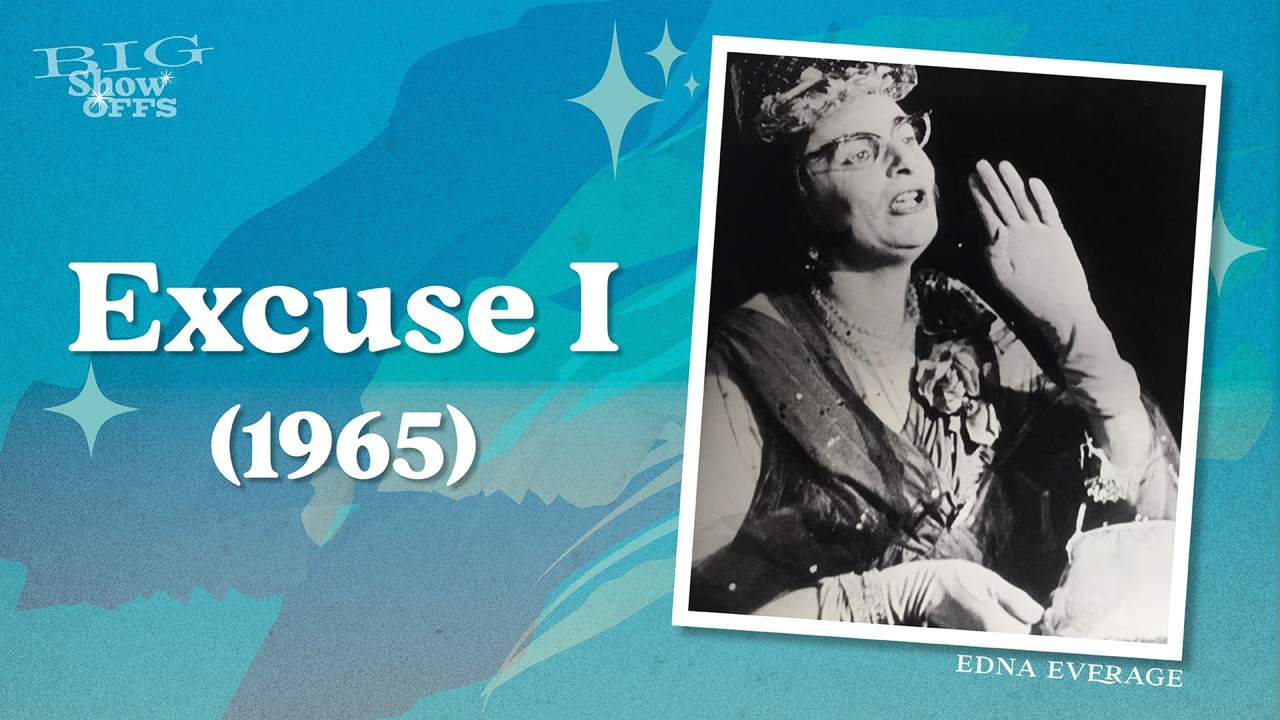
Barry Humphries had introduced the Moonee Ponds housewife to Melbourne audiences in nineteen fifty five when she was meek and mild and a bit scared of the spotlight. A decade on, Edna was emphatically up front. In Barry’s one-man show titled Excuse I, she did the opening monologue, she narrated a home movie about her lovely trip to England, and she closed proceedings by hurling gladioli into the stalls.
Theatregoers relished the floral finale. Better still, they loved saying, Scuse I. This phrase, shrieked by Barry from the wings, was repeated throughout his show. So, when the curtain came down at the Comedy Theatre, Scuse I was on everybody’s lips.
I was reminded of it after Humphries passed away in April 2023. Theatre Heritage Australia had invited me to write an appreciation of the great comic actor and re-reading his marvellous 1992 memoir More Please, I discovered that Scuse I was a ‘favourite genteelism’ of his childhood in Camberwell.
‘Tardy floral ladies’ would say it as they squeezed past little Barry to find their seats at a Regal Hartwell matinee. But something else came to mind as I read that line—something which related to another great Australian clown named George Coppin.
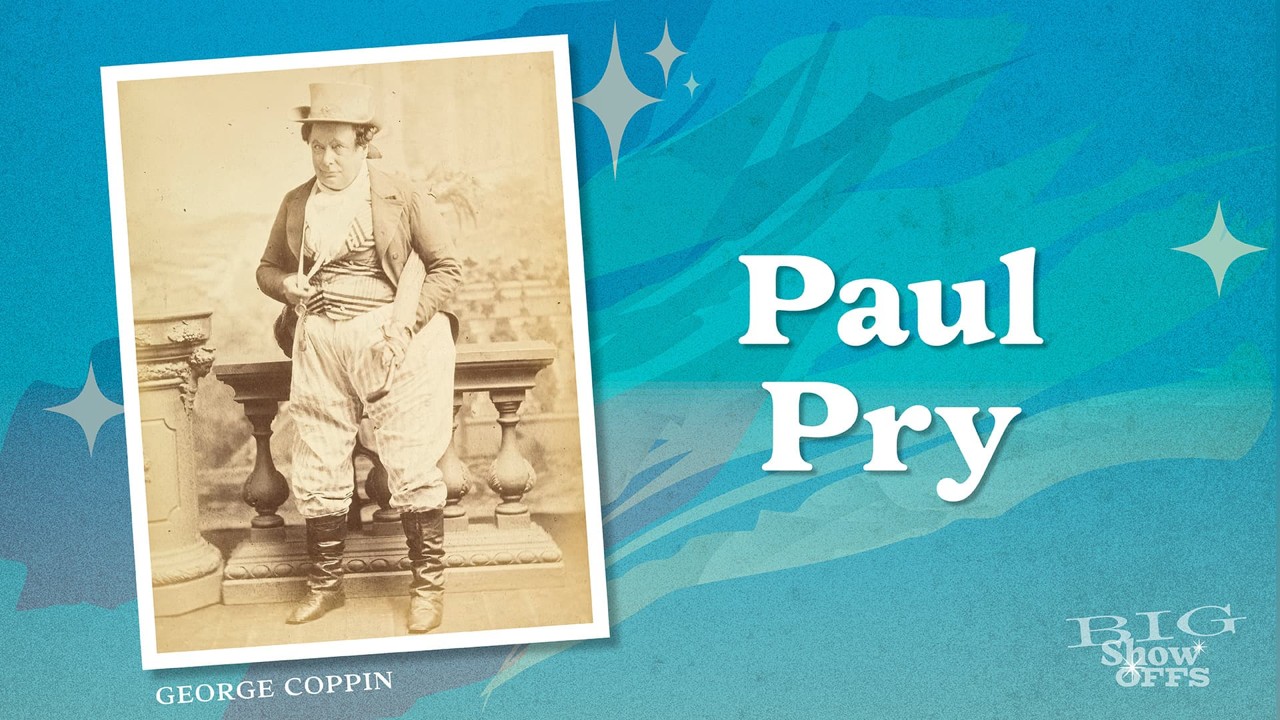
This comic actor from the colonial era was renowned in his day for creeping on stage in the guise of a village busybody named Paul Pry and primly announcing his arrival with the line
‘I hope I don’t intrude’
I hope
I don’t
Intrude
To my ears, that was an echo of Scuse I.
Which got me thinking: was there perhaps a connection between Paul Pry and Edna Everage?
Was Barry Humphries familiar with this prissy 19th century character? And did he know the part had been played many times in Australia by Mr Coppin whose surname today adorns street signs in Richmond and Malvern and Hawthorn and Sorrento?
These would have remained stray thoughts except that I was writing—at the same time—a book about Coppin. And the more I pushed into that project, the more I sensed George and Barry of Melbourne, Victoria were kindred comic spirits—operating in different centuries but tickling our funny bones by speaking through others, by hiding their real selves behind invented characters.
Reflecting on these two self-made men, I also came to see how their long careers echoed one another. Those careers were full of ups and downs, high and lows, and to have come through all that—and still be performing in their 80s—was, I thought, a sign of their resilience, their courage, their creativity. The parallels certainly begged closer inspection.
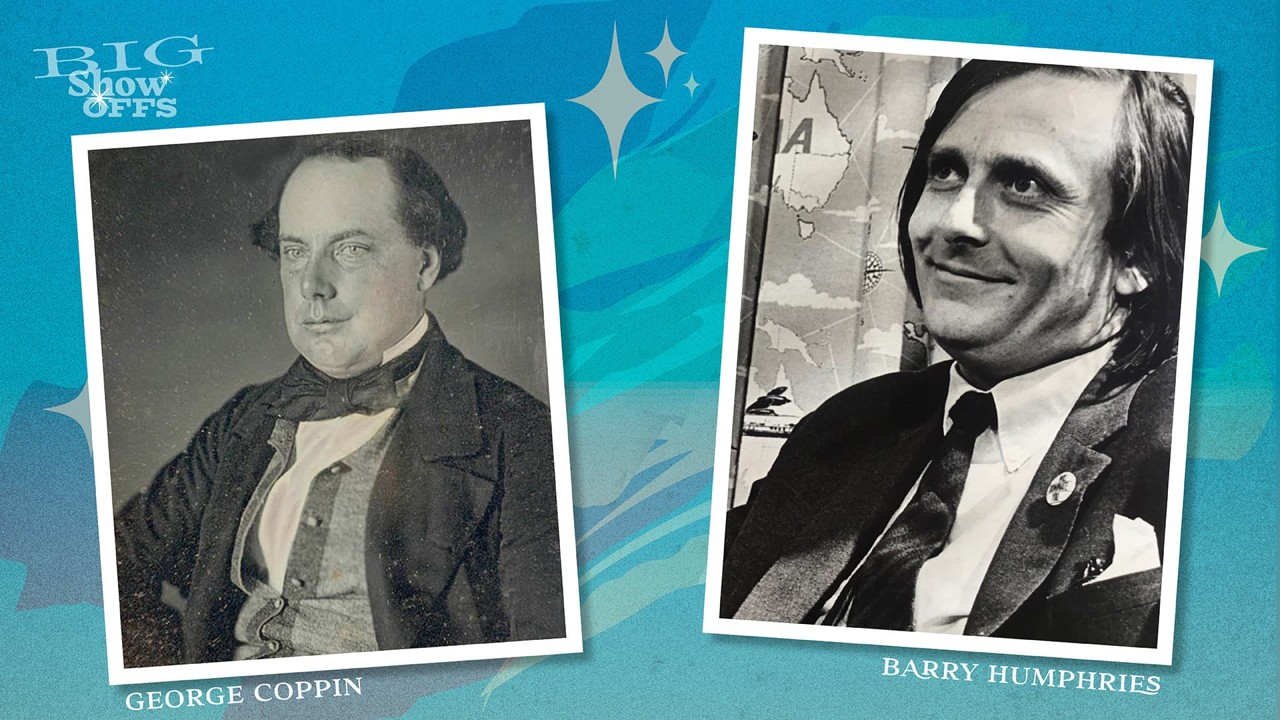
Let’s look at them now ... unmasked.
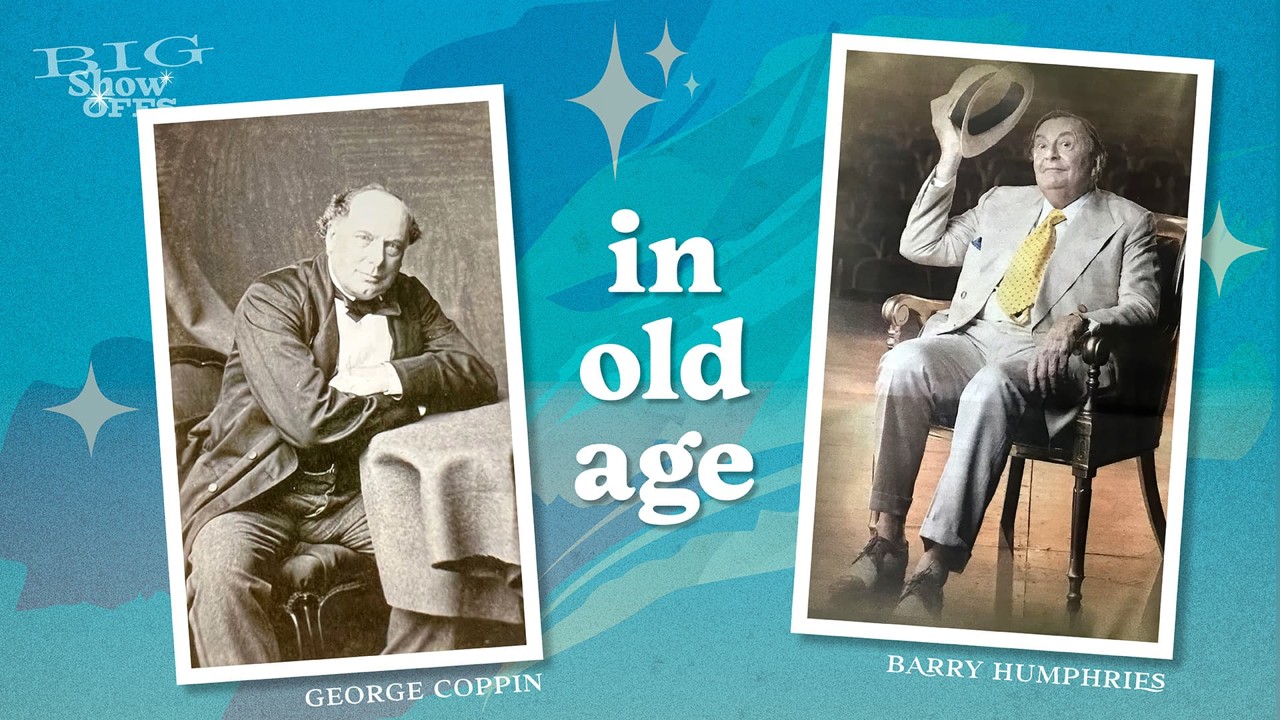
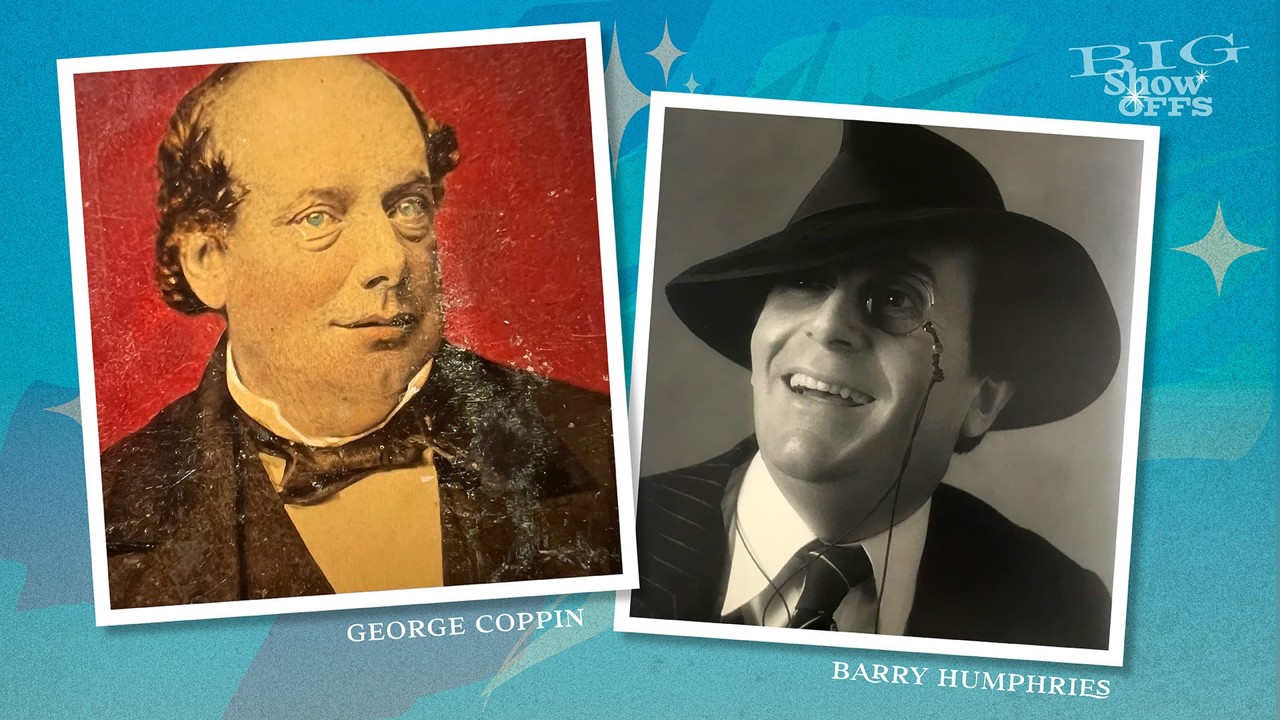
At a glance, I see some similarities: prominent noses, high foreheads and expressive eyes. George had twinkling baby blues. Barry’s were deep set and dark. And when those eyes of his were stilled and focussed on you, they were piercing.
The Coppin portrait dates from 1855 and was taken in Sydney at a studio next door to the Royal Victoria Theatre. The subject was 35 years old at the time. The photograph of Humphries in an airlines lounge is undated, but the length of his hair suggests the late 1960s. That would put Humphries around the same age as Coppin: men on the make, chasing fame and earning reputations as first class clowns. Not that you’d know it from these pictures. There’s the suggestion of a smile with George and some mischief lurking in Barry. Otherwise, they both look rather po-faced. As if to say, this funny business we’re in is quite serious, really.
‘There is a need for people to laugh’, Barry told me in one of our conversations. ‘Not smile or titter’, he emphasised. ‘Laugh. And it seems I have—from time to time—an ability to induce this phenomenon’.
I cannot find an equivalent quote from George but his whole performing career—spanning an incredible 70 years—was all about getting laughs. Certainly, there was a sober side to him as a theatrical manager, a politician, a bank director, a philanthropist. But signing contracts where it stated, Occupation, he chose not to write Entrepreneur or the Honourable Member for South West Province. He always wrote, Comedian.
*****
These two great clowns never met, of course.
Barry was born in 1934, three decades after George passed away, but their off-stage lives were curiously similar. Both were the marrying kind. George wed on three occasions, Barry on four. In both cases, it was their final marriage which proved the most enduring: 30 years for Barry and Lizzie Spender, nearly 40 for George and Lucy Hilsden. They were family men, too. Barry fathered four children, two boys, two girls. George had a brood of ten, daughters mostly.
Outside the family circle, they were club men. George was an active member of the Yorick when that club—incorporated with the Savage in 1966—was a hub for hustling actors and writers. Barry was a Savage, elected in 1998 and an occasional visitor to Bank Place when touring commitments allowed. Throwing parties? George loved doing that, especially at ‘Pine Grove’ in Richmond, the villa he called home from the 1860s. Better still, he liked carousing after hours, usually in the company of agents and actors. We know from letters to his wife that on these city jaunts he sometimes ‘got tipsy’.
Barry drank rather too much as well, resulting in what he called ‘a serious alcoholic illness’. That illness ended in 1971 when he courageously swore off the grog ... and stayed off. Nothing, however, could quench Barry’s thirst for friendship. All his life, he enjoyed the company of authors and academics, artists and musicians. Actors? Not so much. George might have been the exception because he, like Barry, knew how to step out in style.
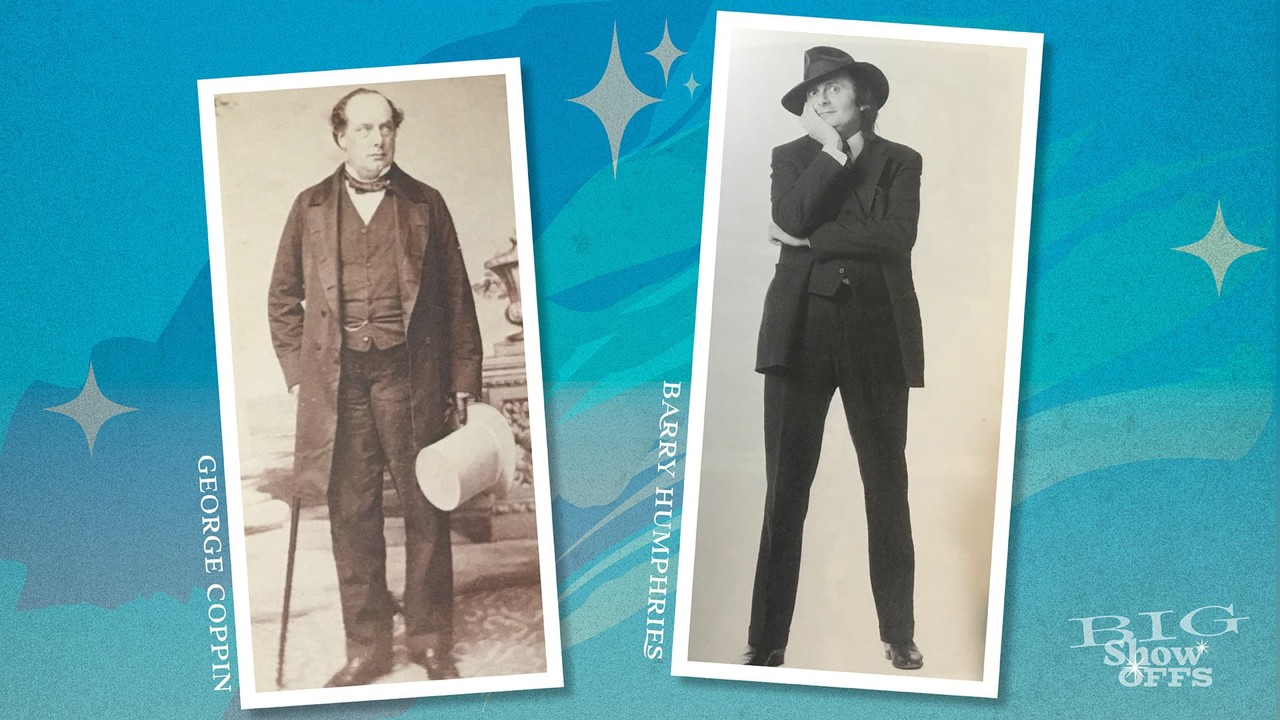
Here’s George dressed to the nines. He was said to always be clothed in the fashionable mode -narrow legged pants, patterned weskits, stove top hats—and this photograph from 1860 confirms it. A century later, Barry was affecting an Oscar Wilde look with longish hair, floppy hats and striped trousers. As his bank balance improved, he became more English than the English by sporting pin-striped Savile Row suits and Lobb shoes, bespoke shirts and black fedoras, bow ties, Panamas, even monocles.
So, dapper chaps—both of them—with the right build for showing off: wide shoulders, barrel chests and shapely legs. But their similarities went beyond exhibitionism. Meeting perhaps at a stage door, I think George would have sensed in Barry—and Barry in George—a fellow traveller: another shape shifter, another master of disguise with an appetite for adventure and hard work.
Both came from good Protestant stock. One was the son of itinerant actors treading the strolling paths of southern England; the other was the eldest of four siblings reared in middle class Melbourne. George Selth Coppin almost sprang from a theatre trunk. He was born on the road in Sussex in April 1819 and, treading the boards at the age of seven, displayed a gift for mimicry. ‘Now, George, don’t over act,’ his father George Senior would tell him. ‘You’ll get bigger laughs that way’.
John Barry Humphries never heard that advice from his father. Eric Humphries was a professional builder who designed homes for Melbourne’s eastern suburbs in the Spanish Mission style. He expected his eldest son to progress from private school to university to a good solid job. Barry had other ideas. He wanted to be an artist or a writer. So, enrolled at Melbourne Grammar, he devoured books and refused to play sport. Later, arts-law studies at Melbourne University were neglected in favour of avant-garde art exhibitions and campus theatricals.
Barry had trouble remembering lines—a weakness he shared with George—but focus was the bigger challenge. Hearing audiences titter during his walk-on in a performance of Twelfth Night, he asked the director if his tights were to blame. ‘No’, came the reply, ‘the problem, is you’re naturally ridiculous’.
Barry was at his best on tour when he had fun imitating the florid speeches they were hearing at each stop. ‘I was grateful that I could at least amuse and entertain by day the actors I dismayed by night’, he said later. Encouraged to expand these back-of-the-bus burlesques, Barry invented a ‘simpering, painfully shy’ housewife with a piping falsetto. Her name was Edna and she went on to appear in a revue. For her first (and what her creator thought would be last) appearance, she dressed down: blue cardigan, floral skirt and a yellow felt hat. No wig, no glasses. Humphries introduced Edna’s diamante specs in a later show, where they gave her face a beady-eyed look.
To my knowledge, Coppin only once adopted a female guise: to send up Lola Montez, who arrived in the colonies in 1855. This globe-trotting dancer and courtesan gave her famous Spider Dance at the Theatre Royal in Bourke Street and her gyrations in a flouncy dress caused a furore. Fanning the controversy, Coppin took to the stage in a hessian skirt hitched to the waist and burlesqued Lola’s every manic move. One admiring theatregoer reported: ‘He makes them die laughing. They applaud with all their might’.
Having touted at taverns, Coppin never took the roar of the crowd for granted. In poetry penned for the opening of his ‘Iron Pot’ theatre on Lonsdale St, in the mid-1850s, he alluded to the incessant toil:
Amid the thousands who’s life battles fight/ The actors’ struggles are not new or light/ And though you find him in your golden land/ E’en then, believe me, he needs a helping hand.
Humphries knew that feeling. Playing bit parts in West End musicals in the early 1960s, he struggled to cut through with his own quirky comedy. ‘I can only hope’, he said, ‘that my audience will pause, reflect and pass on their way. Not forgetting, perhaps, to drop a coin in my hat’.
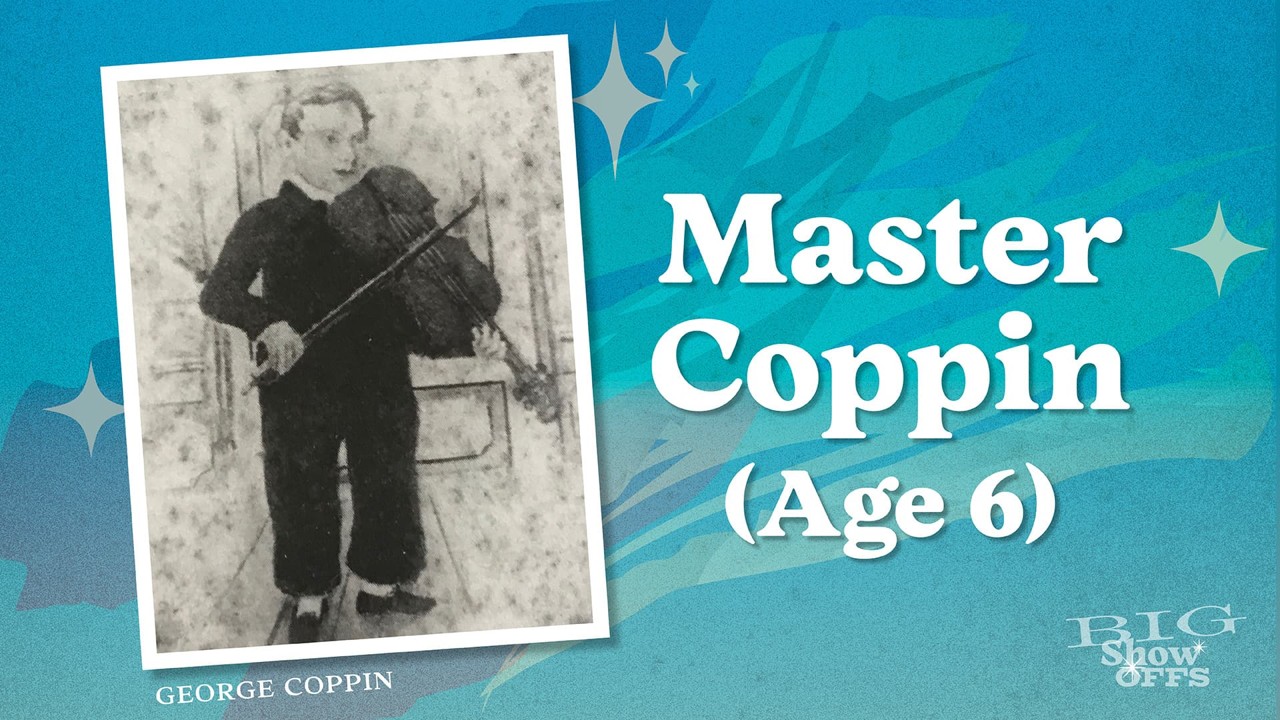
Here’s seven-year-old Master Coppin, somewhere in England, scraping away on a fiddle almost half as his size.
His solos were much praised. His singing voice, too. In his teens, George busked, gave song and dance lessons and played second violin in an orchestra. Between gigs, George composed musical numbers, sometimes words and music. Arriving in the Port Phillip District in the 1840s, his swag swelled with song sheets including one for ‘The Argo Polka’. Within a few years, he had turned this polka into a medley and no ball or soiree in Melbourne was complete without it.
Barry did not play a musical instrument. He played his audience like one. And even though he once wrote a lilting waltz for Edna, he mostly left melodies to other people. The lyrics, however, were always his. Here’s a stanza from ‘Edna’s Hymn’, circa 1968:
Australia’s famous postage stamps/ Are stuffed with flowers and fauna/ Australia is the little man/ Who’s open round the corner/ Australia is a sunburnt land/ Of sand and surf and snow/ All ye who do not love her/ Ye know where you can go.
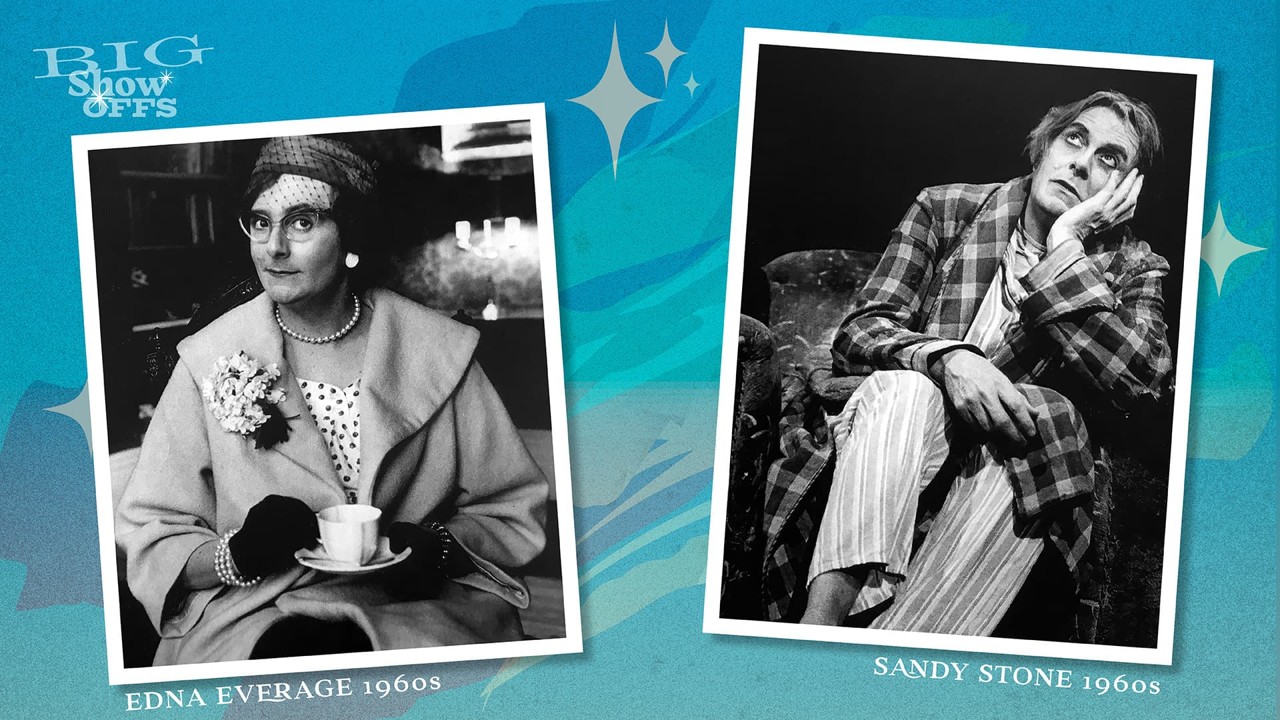
Barry Humphries declared his life project was to chart what he called ‘Australia’s vast and unexplored suburban tundra’.
He found his most effective tool for doing this was the monologue. On two EP records, both titled Wild Life in Suburbia, he had Edna on one side rhapsodising about her lovely home in Humoresque Street, Moonee Ponds. And on the other ... Sandy Alexander Horace Stone, of 36 Gallipoli Crescent, Glen Iris:
Well ... the card night went off very nicely indeed except that Beryl’s sister, Lorna, got a bit excited during the five hundred and knocked over a cup of tea and a curried egg sandwich on the new carpet. Oh, she was very apologetic but as I said to Beryl later, Beryl I said, being sorry won’t buy you a new wall to wall. And you know what curried egg does to a burgundy Axminster.
There was poetry in Sandy’s rasping banality. In his liner notes for Wild Life in Suburbia, issued in 1959, Melbourne architect Robin Boyd wrote that Humphries ‘has taped us in killing caricature’.
The thrill was greater still when Edna and Sandy appeared on stage in 1962. In A Nice Night’s Entertainment, at the Assembly Hall in Collins Street, Humphries savoured the ‘whoosh of laughter’ that greeted references to sponge fingers and chenille bedspreads. Melburnians, he said, had never heard their homes described before in a theatre.
Sandy went on to be Humphries’ adagio act, usually opening the second half of his stage shows sitting on a moth-eaten arm chair, clutching a hot water bottle. Coppin had an equivalent character, a humble porter named Phil Stapleton. We have no picture of him in this ‘serio-comic’ part, but when he performed Old Phil’s Birthday in the colonies and offshore, it was said he brought audiences ‘close to tears’.
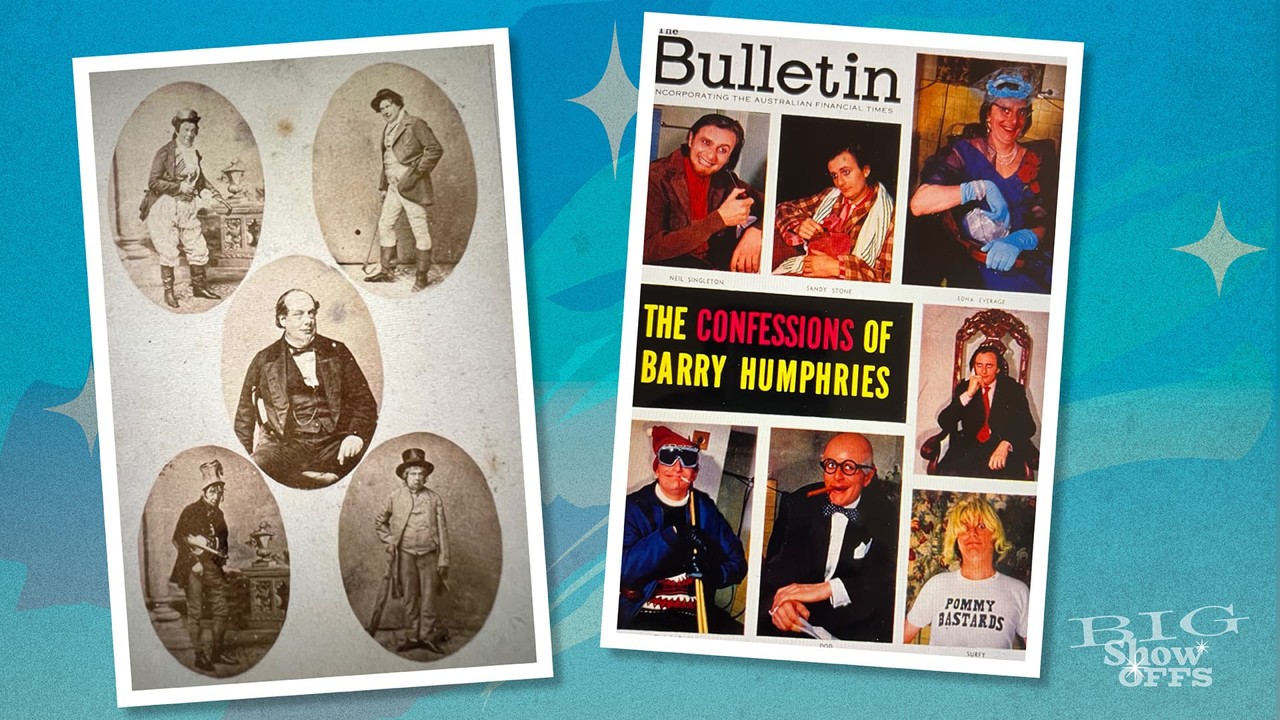
Low comedy was Coppin’s real forte—‘low’ meaning laugh-out-loud buffoonery. He excelled with pratfalls, tumbles and funny voices and in the course of a single evening, he could appear in three or four different guises. Crack the cobbler and Jem Bags the wandering minstrel; Trotter Southdown and Sam Snaffle, maybe even Demosthenes Dodge ... The Artful Dodger.
These were stock characters drawn from popular plays and Coppin’s carefully judged caricatures were much admired. Eminent drama critic James Smith wrote:
Rarely has an actor succeeded so well in presenting the ponderous stupidity of certain types. Such persons are actuated in their intercourse with lifelike fidelity.
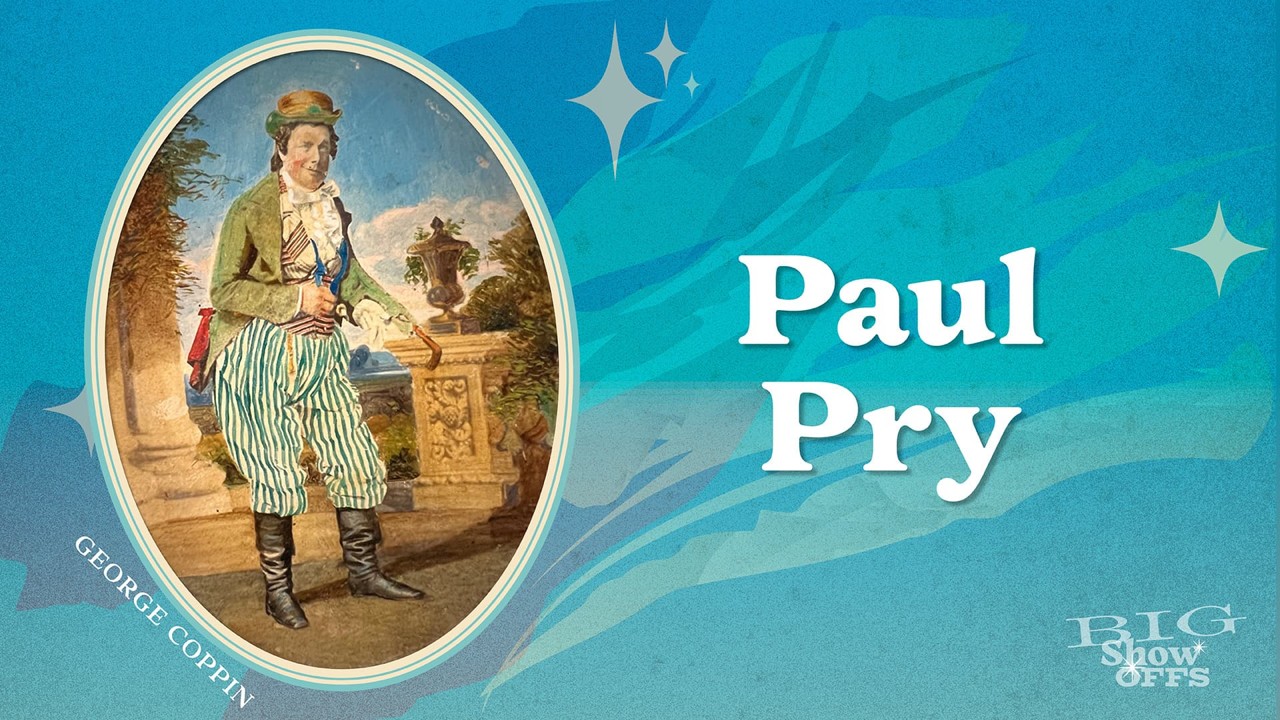
The character colonial audiences loved best was Paul Pry.
Tradition dictated that anyone playing the part come on with a furled parasol. ‘Forgetting’ to take that with him at the close, he would then come back ... and say a few words. Playing Pry, Coppin often had a lot to say: about the price of wheat, the state of country trains or a passing scandal. These ‘local hits’, as he called them, were tailored to the colony he happened to be in and audiences relished the winking references.
Humphries worked the same way. Going on tour, he would suss out the scene in Sydney or Adelaide or Perth, see who was in and who was out, and then—in the guise of Edna—hold up a cracked mirror to all the goings-on. ‘They weren’t all laughing, mate’, one journo sneered after a show in 1968. ‘Lot of people I know are worried about where your stuff’s going. They think it lacks ... relevance’.
Coppin had his critics too. One time, playing Paul Pry in South Australia, his allusions to a private affair were decried by local clergymen as ‘broadly indelicate’. One Adelaide paper thought he ‘deserved to be hissed off the stage’. He was not and made a welcome return.
Edna also had a soft spot for the city of churches. In 1976, she was half an hour into her act when a well-dressed man tip toed towards his reserved VIP seat. It was Don Dunstan, the Premier of South Australia. Training a torch on Dunstan, Edna said:
‘I’m often asked what is the latest thing in Australian theatre. Ladies and gentlemen, he has just walked in!’
Reprimanding patrons and prying into their living arrangements ... this became an essential part of every Humphries show. Not knowing if you would be picked on by Edna created a frisson of fear in the stalls and her aura of danger only intensified after being elevated to a Dame.
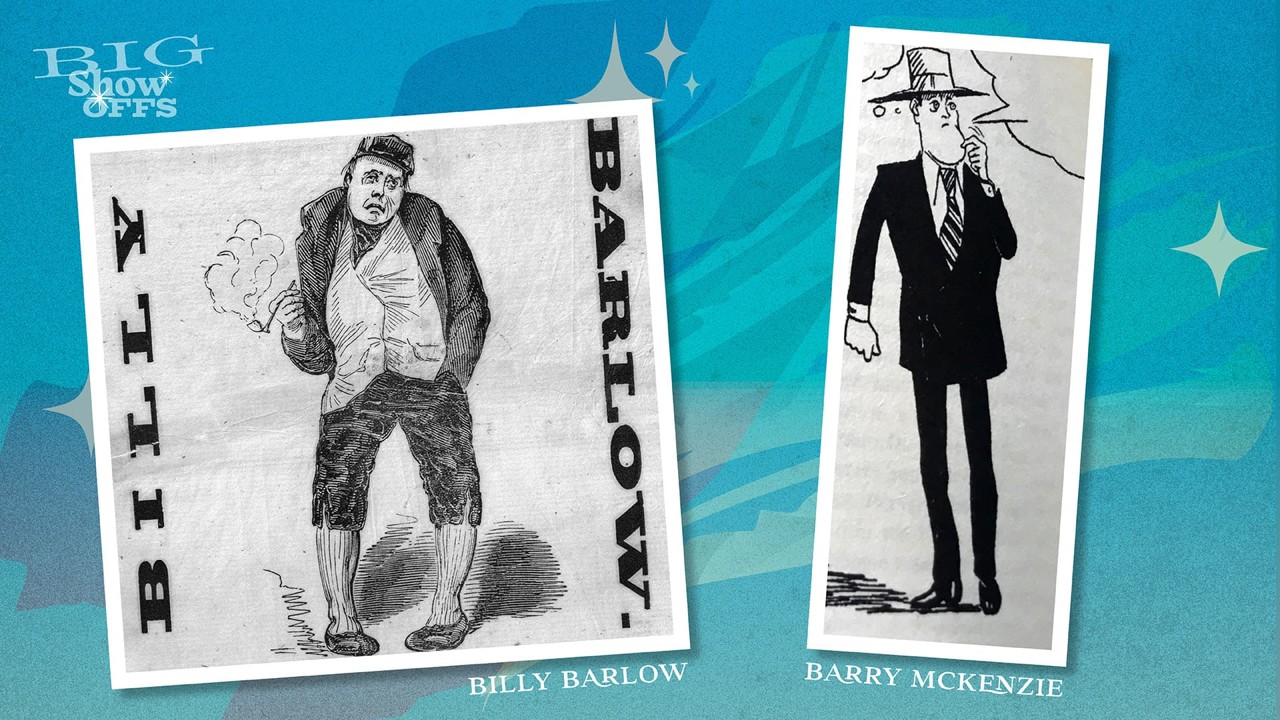
The title was bestowed on her in 1974, in the closing scene of Barry McKenzie Holds His Own, a cheerfully vulgar motion picture about a gormless Ocker—played by Barry Crocker—whose adventures in London’s Kangaroo Valley consisted of chasing women, drinking to excess and vomiting. Humphries invented him as a cartoon character for the satirical English magazine, Private Eye. So, Barry—Bazza!—McKenzie was never seen on stage singing this charming party song:
Oh, I was down by Bondi pier/ Drinking tubes of ice-cold beer/ With a bucket full of prawns upon me knee/ But when I’d swallowed the last prawn/ I had a technicolour yawn/ And I chundered into the old Pacific sea.
When I hear ‘The Old Pacific Sea’, I’m reminded of another comic character from the 19th century named Billy Barlow. Looking a bit worse for wear, Billy always came on with the same street patter:
Oh ladies and gentlemen, how do you do/ I’ve come out before you with one boot & one shoe/ I do not know how it tis, but somehow tis so/ Oh! Isn’t it hard upon Billy Barlow.
Billy was a jaunty journeyman—not unlike Bazza—and his rollicking verses changed all the time, depending on which low comic was playing him.
In 1840s Ireland, Coppin’s Billy delivered sly doggerel about the Troubles. Later, in country Victoria, he penned Billy Barlow at the Goldfields which inferred scales were tipping in favour of gold sellers instead of gold getters. The diggers loved it. Then there was Billy Barlow’s Advice to Emigrants, Coppin’s calling card on a visit to England in 1854. Its jolly sing-song style carries a whiff of Barry McKenzie:
If you go to Australia don’t work with the spade/ But stick to the towns and pursue your own trade/ For two pounds a day is the wages that go/ To hard working mechanics, says Billy Barlow, Oh!/ Dear rag-gi-dey-o, lots of work for us, there, says Billy Barlow.
Coppin’s easy manner found favour in the Old Country. Admiring journalists said he would ‘unquestionably be an acquisition to the profession’ if he chose to stay but the man of the hour decided against it. He felt more attached than ever to his adopted home.
Humphries more readily embraced the expatriate life. Initially, his satire fell flat with English critics who registered shades of disapproval ranging from terse bemusement to open hostility. Housewife Superstar in the late 1970s changed all that. This Drury Lane show made him a star and as his fame grew, the attractions of London life multiplied. Suddenly, Humphries—the one time fringe dweller—was being admitted to the city’s best clubs, befriending royalty and mingling with the literati, a lofty perch from which tall poppy Aussie expats were easily lopped.
For a long time, he admitted, ‘I couldn’t come back to Australia without journalists bringing up the old chestnut of
‘What’s he doing meddling in our affairs when he’s rich and famous and doesn’t even live here’.
Humphries eventually resided in London, in Hampstead, where he tended a vast library that included first editions of Oscar Wilde and reams Gothic fiction. In 2005, he told me:
‘I more or less go there to dust my books, the way Percy Grainger used to come to Australia ... to sort of sweep his [Parkville] museum’.
He also stressed:
‘I’m in Melbourne quite a Iot. I happen to think it’s a wonderful city. It’s just not an uncritical attitude’.
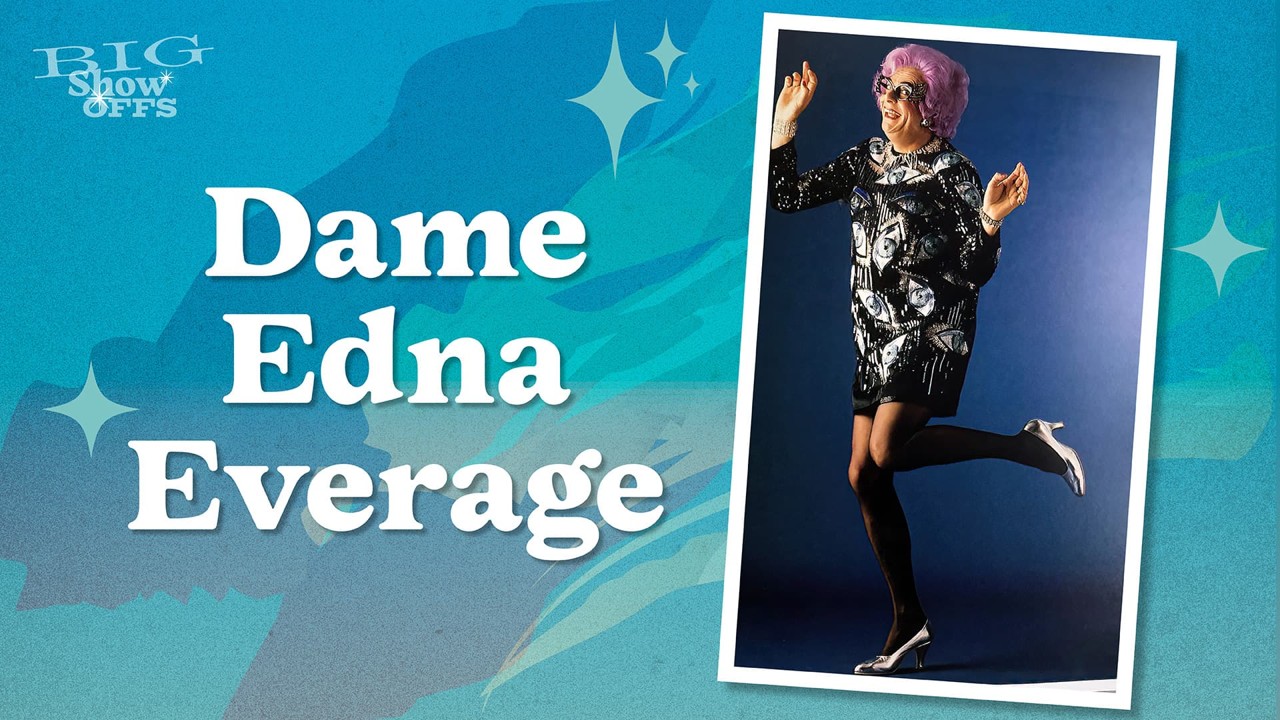
Humphries’ acceptance in both hemispheres was magnified by Dame Edna’s giddy ascent into superstardom.
In the last decades of the 20th century, she was a ubiquitous presence on stage and on TV, notably on The Dame Edna Experience.
‘Not so much a show’, she explained, ‘as a conversation between two people, one more interesting than the other’. Humphries had created a monster with a life of her own and only one other character could steal a teeny bit of the Dame’s thunder. That was Sir Leslie Colin Patterson.
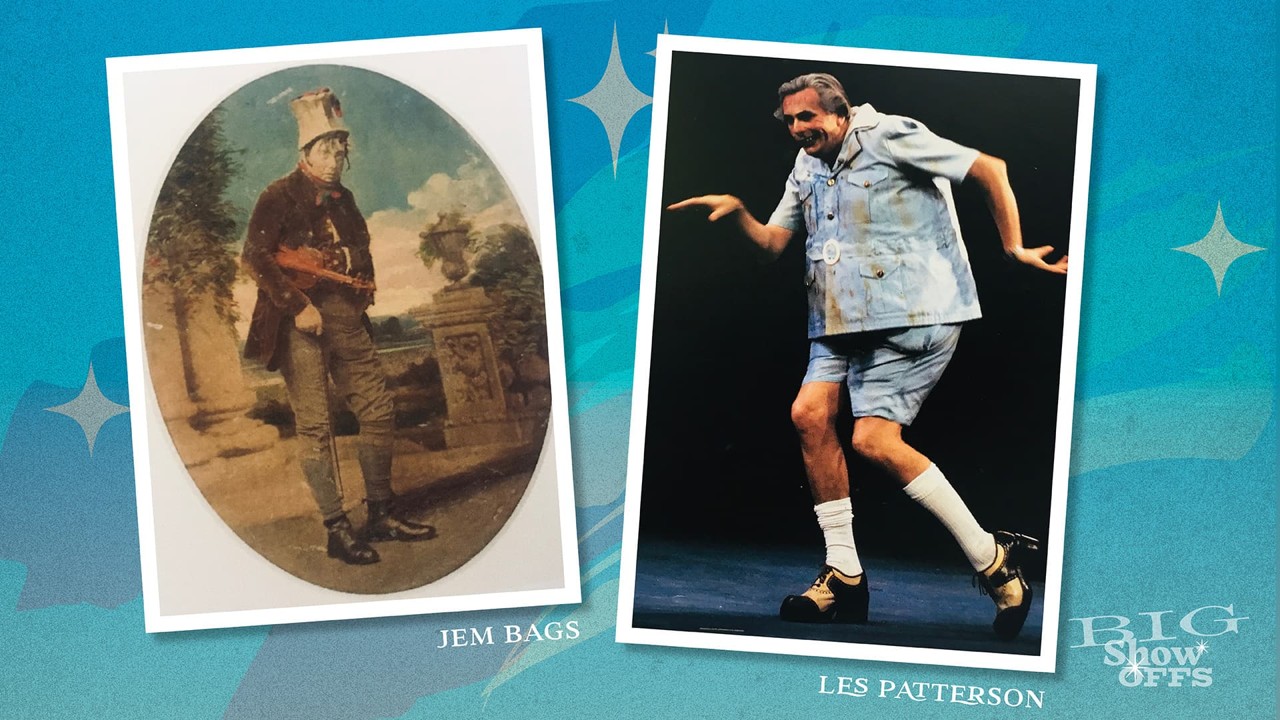
Sir Les made his debut in 1974 at a Sydney leagues club wearing a soiled blue suit and white shoes. Mistaken for a club official, Les was soon flying high as Australia’s Cultural Attache to the Court of St James. ‘Busy as a Baghdad bricklayer’, he was ... and uncannily like one of Coppin’s favourite characters: Jem Bags.
Mr Bags, Esquire, was a Cockney busker, vagabond and all round rogue. He belonged to a High Victorian farce titled The Wandering Minstrel where he played the fiddle—badly—and masqueraded as an aristocrat down on his luck. Jem was always crumpled and rumpled and repeating ‘vulgarities’ that pleased the pit but disturbed the dress circle. Sound familiar?
Here’s Sir Les making his big entrance in a show from 1978:
SL: If I may, I’d like to correct the possum who just introduced me over the PA as plain ‘Les Patterson’ - as of the last Honours List, its SIR Les Patterson.
But, ladies and gentlemen, you can call me Les
... Les is the name
should we bump into each other
in the dunnies.
And here’s Jem Bags making his entrance in The Wandering Minstrel. The scene is a posh London apartment, and our interloper is met by the lady of the house:
The lady: Allow me to inquire under what name you are at present travelling?
JB Why, marm, I answers to the name of Jem Bags for want of a betterer.
The lady: I fear you must feel yourself rather fatigued.
JB Fatigued, marm? Quite the opposite. I’m as fresh as an oyster on the fifth of August.
The lady: Some refreshment, sir?
JB Why, I certainly should like a drop of the heavy.
The lady: I’m afraid we can’t offer you any ‘heavy’ but we have some excellent light wines.
JB Bless you, marm. I’m not particular to a shade!
Old Les was partial to the odd drop:
Les: I’ve got a confession to make ... I’ve had a drink tonight. I’ve had a couple of drinks as a matter of fact. To tell you the truth, I’m as full as a Catholic church ... Awh, I’m sorry ladies, please forgive me. That’s bloody parliamentary language, that is.
Les was also fond of ‘the ladies’ ... like Jem Bags. Here he is again in The Wandering Minstrel, this time meeting the man of the house.
The man: Sir, what are you after?
JB I daresay you think I was arter that servant girl a yours.
The man: It was too plain, sir and I must say it surprises me to see you letting yourself down in such a way.
JB There wasn’t no lettin’ down, sir. Quite the contrary, I was keepin’ up me character. You see, we wandering minstrels is so famous for running arter the gals, that one is hobligated to do it, whether he likes it or not.
The man: Well! I should have thought you might have something better than that to embrace.
JB Ah, It’s the way with all the gals directly they set eyes on me. They’re never easy. But bless her little ’eart, she shall have a kiss!
I’m not seeking to draw a direct line between Jem Bags and Sir Les or Edna and Paul Pry or Barry McKenzie and Billy Barlow. They’re all phantoms now, vanquished by time. But when you set these characters side by side, it’s as if they’re still misbehaving, still twitching in the dark and connecting the men behind them to a long, long line of mischief-makers.
Spooky, as Edna would have said.
To me, the past and the present were most powerfully joined when Sir Les was showing off his, er ... ‘enormous encumbency’. Humphries hoped at least one highbrow critic, whatever he thought of the show, might see in Les’s priapic posturing the persisting influence of Aristophanes or Shakespeare’s Falstaff. The bigger influence, I think, was British music hall.
This proletarian entertainment had its origins in the ‘free and easy’ saloons of the mid-19th century. Coppin, in Melbourne, was onto it early. He opened his Apollo Music Hall on Bourke Street in 1862 and prospered with comics and singers, minstrels and roller-skaters. London music halls were on their last legs by the time Humphries arrived there in 1959 but a visit to the aged Metropolitan Theatre left its mark:
At the back of the royal circle was a long bar with embellishments engraved in frosted glass ... you could order a Guinness and, like a personage in a painting by Sickert, lean on a brass rail and from that steep vantage point gaze down through the smoky haze to the foreshortened artistes on stage.
Humphries also stored memories of Melbourne’s Tivoli Theatre where he saw famous vaudevillian, Tommy Trinder treading the boards. ‘Tommy was very, very funny’, he recalled. But it was not just the catch phrases and the double entendres that appealed to young Barry. It was the way Trinder drew himself into smirking collusion with the audience. Humphries—who called himself a ‘music hall artiste’—sought to do the same.
‘The whole psychology of an audience is fascinating’, he told me. ‘In a theatre, people cease to be individuals. They become part of a community and it’s a unifying experience. Like church’.
George Coppin rode his waves of laughter well into his eighth decade.
‘I can rub on’, he told admirers in the 1870s, ‘so long as I keep clear of the gout’. His comedy carousel only stopped whirling in 1881, and it proved to be a long swan song during which the retiring star re-played all of his favourite characters.
Humphries did the opposite. Giving his penultimate one man show in 2019, he showed Sandy Stone the exit. Les was also jettisoned, leaving audiences alone with Edna. I reviewed that two hour joyride at the Arts Centre and described its solo star as a ‘volcano of vanity’.
My Gorgeous Life also struck me as an overly familiar bag of tricks.
The show I prefer to remember him by is Back with a Vengeance. This outing, in 2005, marked the fiftieth anniversary of Edna’s Melbourne debut and Humphries—still agile in his early 70s—was in lacerating form.
What made Back with A Vengeance really special, for me, was the denouement. Previously, I’d seen cherry pickers thrusting Edna into the Gods, putting her almost within reach of adoring possums.
This time, the climax was more ... understated. One moment, Edna was up on stage, gadding about in frothy frou-frou. The next, miraculously, we were observing Humphries in a double breasted pinstriped suit and a hat worn rakishly like Spencer Tracy.
‘Right up until the first night, I wasn’t sure if the effect would work’, he told me.
It did, wonderfully. And when the applause finally ebbed, Humphries dipped his lid ever so slightly as if to say ... Scuse I.
Coppin conjured magic as well.
In 1866, 140 years before Back with a Vengeance, he was on stage at his Haymarket Theatre on Bourke Street in a show titled Coppin in California.
This one act farce was poorly received by the critics and closed quickly but there were no wounding words on opening night when he came before the the throng, ‘cheeks reddened by rouge and tousled hair just out of a wig’.
As I report in my book, Entertaining Mr Coppin:
George was grinning from ear to ear. The house was in a roar. He was Melbourne’s man of the moment, a man of the world, and he lapped it up. And when the ovations receded and there were no more bows to be had, he made for the exit. Even then, he could not resist one final flourish. Just before he disappeared behind the curtain, he gave the tiniest salute, just the whisper of a wave, as if to say, ‘Thank you all, I hope ... I didn’t ... intrude’.
Sources and Further Reading
Alec Bagot, Coppin the Great, Father of the Australian Theatre, Melbourne University Press, Melbourne, 1965
Ian Britain, Once an Australian: Journeys with Barry Humphries, Clive James, Germaine Greer and Robert Hughes, OUP Australia and New Zealand, 1998
Keith Dunstan, Supporting a Column, Cassell Australia, Melbourne, 1966
Simon Elliott, Rarely Everage: The lives of Barry Humphries, National Portrait Gallery exhibition catalogue, and Arts Centre Melbourne, 2003
Barry Humphries, More Please: An Autobiography, Penguin Books Australia, Melbourne, 1992
Barry Humphries, A Nice Night’s Entertainment: Sketches and Monologues 1956-1981, UK: Granada Publishing, 1981
Barry Humphries, Neglected Poems and Other Creatures, Angus & Robertson, NSW, 1991
Barry Humphries, Handling Edna: The Unauthorised Biography, Hachette, Australia, 2009
Barry Humphries, Wild Life in Suburbia, record single released by Score, 1958
W.J. Lawrence, The Life of Gustavus Vaughan Brooke, Tragedian, Belfast, 1892
Tony Moore, The Barry McKenzie Movies, Currency Press, Sydney, 2005
Simon Plant, Entertaining Mr Coppin : An Antipodean Showman in Civil War America, Theatre Heritage Australia, Melbourne, 2025
Simon Plant, ‘Look at Me When I’m Talking to You: Facing up to Barry Humphries’, On Stage (Theatre Heritage Australia), June 2003
Frank Van Straten, Tivoli, Thomas C. Lothian, South Melbourne, 2003
Ken Thomson (ed.) Barry Humphries: Bepraisements on his Birthday, Enitharmon Press, London, 1994
MUM Melbourne University Magazine, Spring 1961
Acknowledgements
With thanks to Dr Simon Piening, State Library Victoria and the Australian Performing Arts Collection, Arts Centre Melbourne
*Big Show Off’s: The clowning achievements of George Coppin and Barry Humphries was presented at the Athenaeum Library, Collins Street, Melbourne, in July 2026 as part of Melbourne Rare Book Week.

